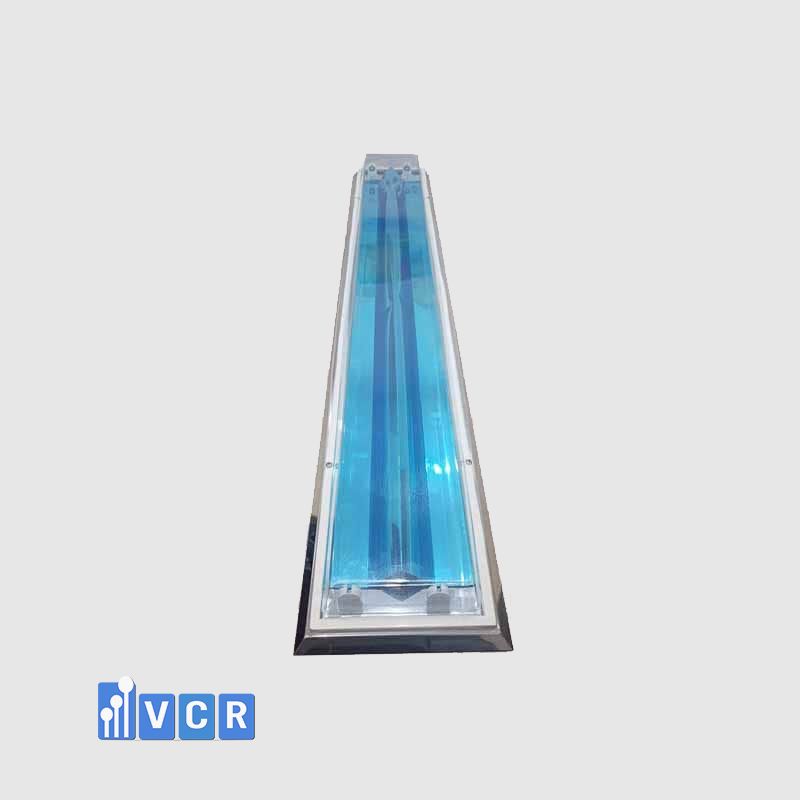

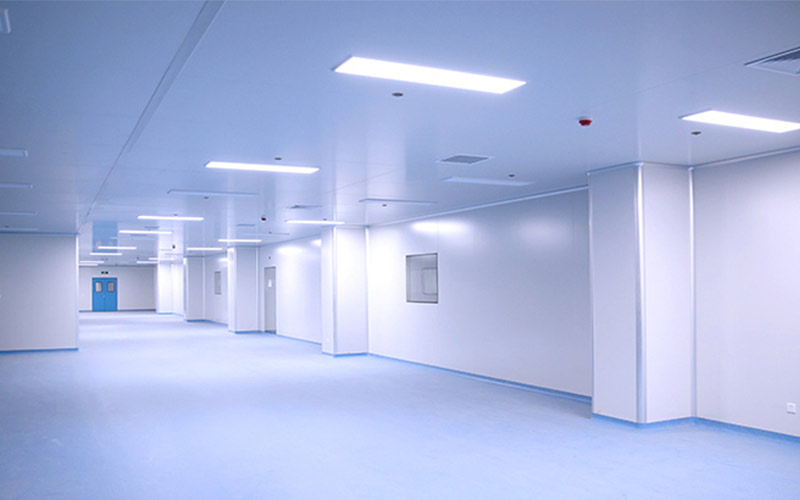
Selecting a cleanroom light supplier for a factory in Pho Noi A Industrial Park requires evaluation of sealing, IP protection, luminous flux, illuminance, colour rendering, housing material, LED components, ceiling compatibility, installation quality, and after-sales support.
- Demand for Cleanroom Lighting in Pho Noi A Industrial Park
- What Is a Cleanroom Light?
- Why Should Standard Office Lights Not Be Used?
- Is IP65 Always Required?
- Common Cleanroom Light Types
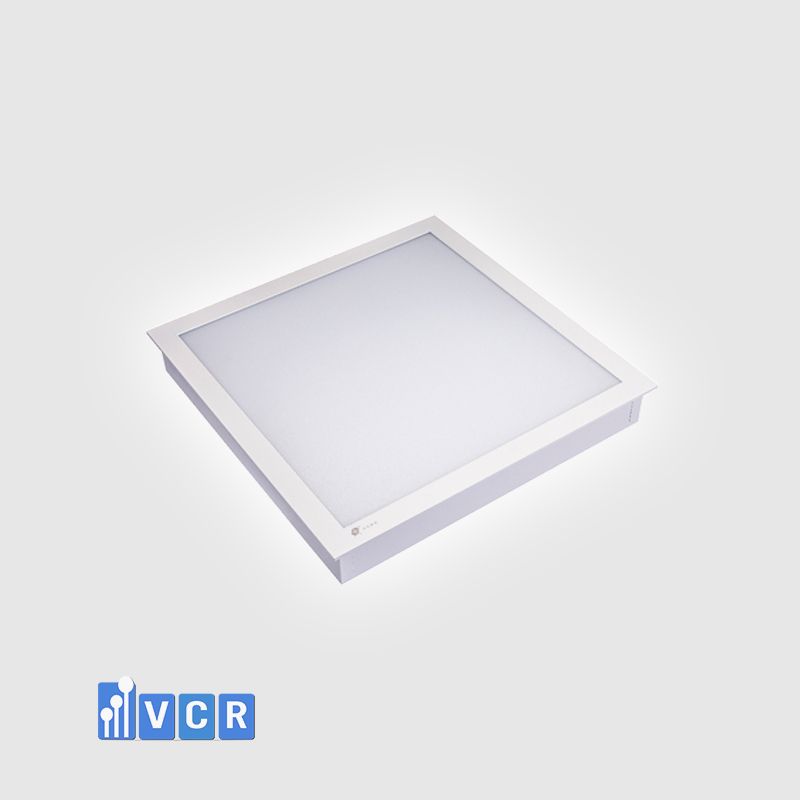
- Recessed Cleanroom Lights
- Surface-Mounted Cleanroom Lights
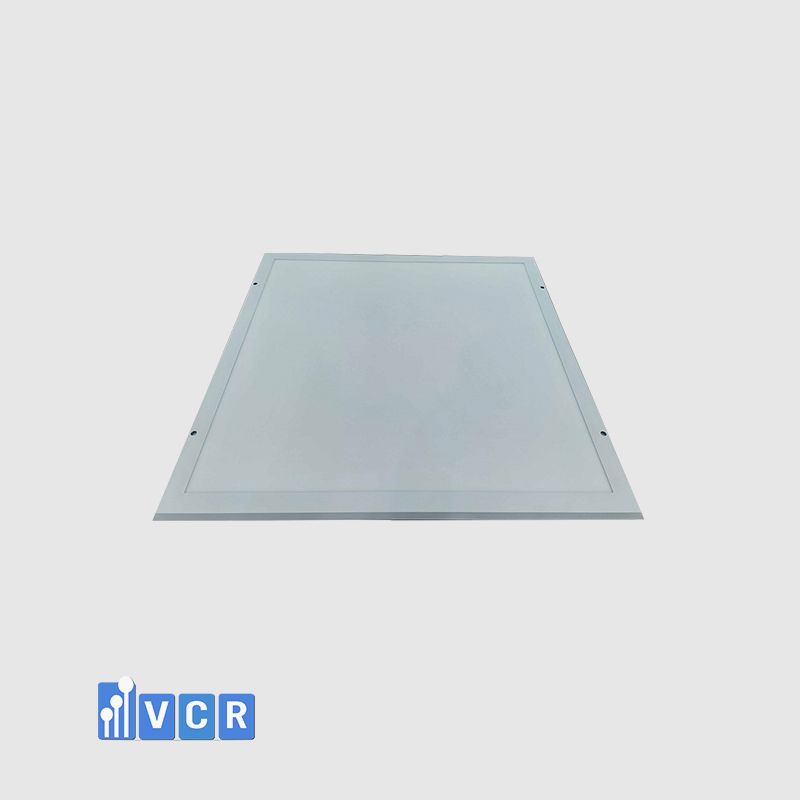
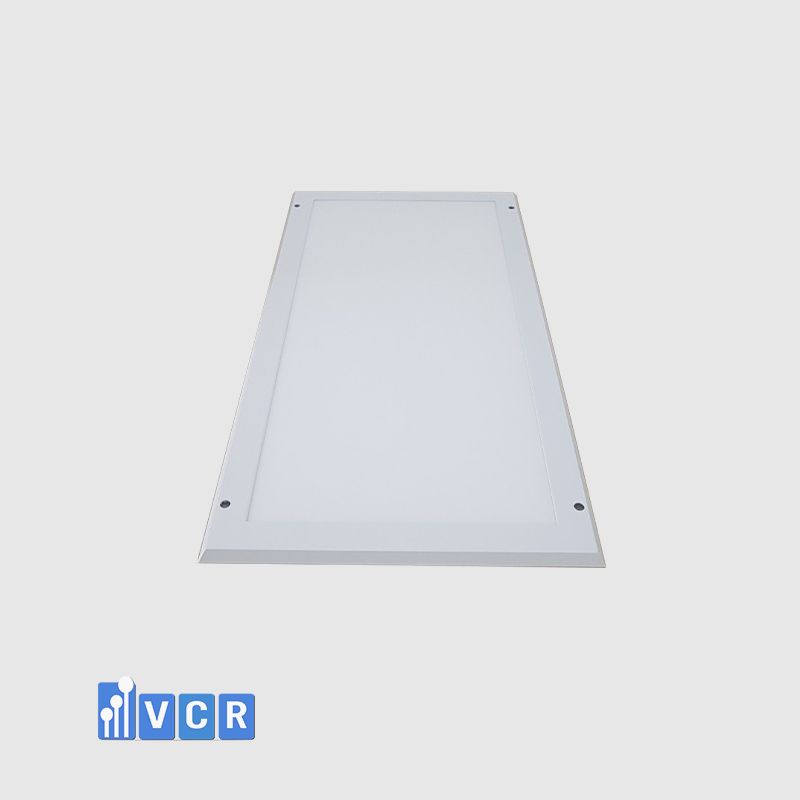
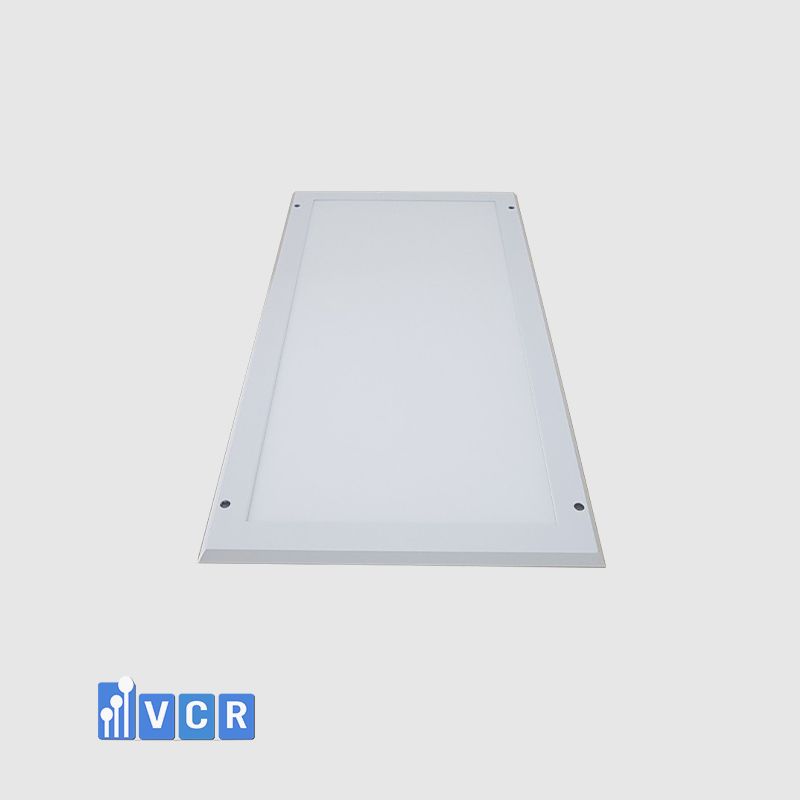
- Cleanroom Panel Lights
- Explosion-Proof Cleanroom Lights
- Criteria for Selecting a Supplier in Pho Noi A Industrial Park
- Understanding the Ceiling System
- Correct Illuminance for the Task
- Luminous Flux and Efficacy
- Colour Rendering
- Colour Temperature
- Glare and Diffusion
- IP Protection
- Housing Material
- LED Chips and Drivers
- Thermal Management
- Maintenance Access
- Technical Documentation
- What Does “Genuine” Mean for a Cleanroom Light?
- Why Price Alone Is Not Enough
- Delivery Inspection
- Transportation and Installation at Pho Noi A Industrial Park
- Common Purchasing Mistakes
- Cleanroom Light Supplier for Factories in Pho Noi A Industrial Park
- Why Choose a Supplier with Integrated Capability?
- Information Required for a Quotation
- Frequently Asked Questions
- Conclusion
Demand for Cleanroom Lighting in Pho Noi A Industrial Park
Pho Noi A Industrial Park includes factories operating in electronics, precision engineering, pharmaceuticals, food, cosmetics, medical devices, supporting industries, and component manufacturing.
Many of these facilities use cleanrooms, controlled production areas, laboratories, packaging rooms, inspection zones, and sealed panel ceilings.
Lighting in these areas must provide sufficient illumination while supporting cleanliness, sealing, hygiene, and long-term reliability.
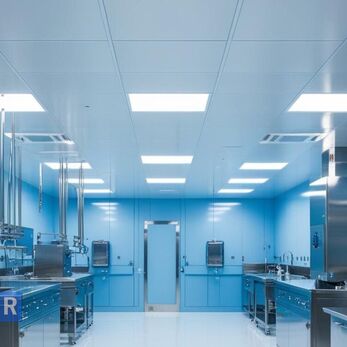
A cleanroom light is designed to integrate into controlled-environment ceilings, minimise gaps, reduce dust-retention points, and provide a smooth, cleanable surface.
Using unsuitable lighting may cause air leakage, dust accumulation, glare, insufficient illumination, rapid component failure, or difficult maintenance.
Factories should therefore select suppliers capable of supporting lighting design, ceiling integration, installation, and post-installation verification.
What Is a Cleanroom Light?
A cleanroom light is a lighting fixture designed for environments where dust, microorganisms, humidity, room pressure, surface cleanability, and contamination risks must be controlled.
Common English terms include cleanroom light, cleanroom LED light, and cleanroom lighting fixture.
The fixture may be recessed, surface mounted, panel mounted, or integrated into a cleanroom ceiling system.
Modern cleanroom lights mainly use LED technology because it offers high efficiency, long service life, relatively low heat generation, and flexible sizing.
They are used in pharmaceutical, food, dietary supplement, cosmetic, electronics, semiconductor, medical-device, healthcare, laboratory, and research facilities.
Why Should Standard Office Lights Not Be Used?
A standard office LED panel may look similar to a cleanroom fixture, but its construction is usually intended for general commercial spaces.
The frame, driver box, cable entry, diffuser, and installation joints may not provide suitable sealing.
Air can pass through gaps around the fixture and affect room-pressure control.
Exposed edges and joints may also collect dust and be difficult to clean.
Lower-quality commercial fixtures may use diffusers that yellow, drivers that flicker, or LEDs that lose brightness quickly under long operating hours.
The fixture should therefore be selected from its technical construction rather than appearance alone.
Is IP65 Always Required?
Not every location requires IP65, but the protection level must match the actual environment.
The IP rating indicates protection against dust and water under defined test conditions.
Dry areas without wet cleaning may permit a lower rating where the project design allows it.
Areas with frequent cleaning, high humidity, water spray, or stricter dust control may require IP65 or another suitable level.
However, fixture IP rating alone does not guarantee a sealed ceiling installation.
The gasket, mounting frame, fasteners, and interface between the fixture and ceiling panel must also be properly designed.
Common Cleanroom Light Types
Recessed Cleanroom Lights
A recessed fixture is installed nearly flush with the ceiling surface.
This reduces dust-retention points and creates a surface that is easier to clean.
Recessed lights are commonly used in sealed panel-ceiling systems.
The fixture dimensions and ceiling opening must be confirmed accurately before installation.
Surface-Mounted Cleanroom Lights
A surface-mounted fixture is fixed below the ceiling.
This approach is useful where recessed installation is impossible or where additional lighting is required after construction.
The housing should still be smooth, sealed, and easy to clean.
Cable entries, connection boxes, and mounting points should also be carefully controlled.
Cleanroom Panel Lights
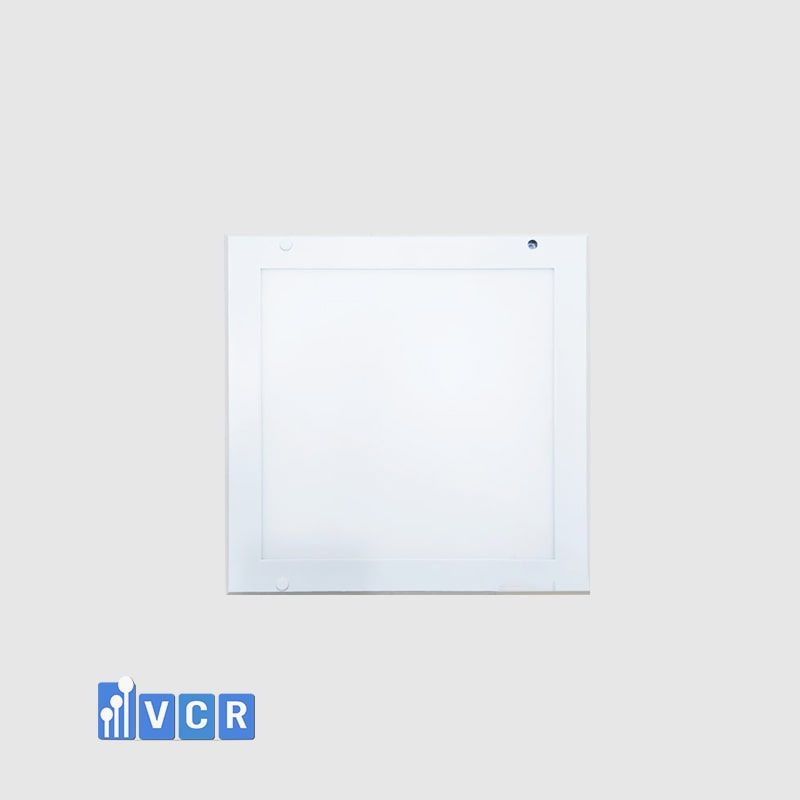
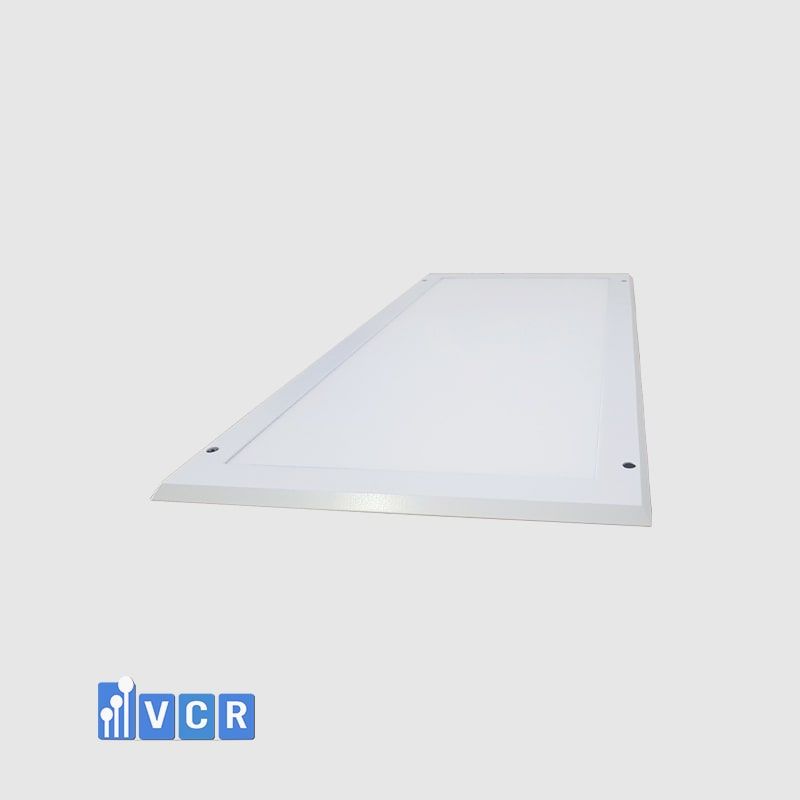
Panel lights are commonly square or rectangular and use a diffuser to provide relatively uniform illumination.
Typical nominal sizes may include 300 × 300 mm, 300 × 600 mm, 300 × 1200 mm, and 600 × 600 mm.
Actual dimensions should be confirmed against the ceiling system rather than assumed from nominal size.
Explosion-Proof Cleanroom Lights
Areas containing solvents, flammable gases, or hazardous atmospheres may require certified explosion-proof lighting.
A sealed cleanroom fixture is not automatically explosion proof.
These requirements should be evaluated separately.
Criteria for Selecting a Supplier in Pho Noi A Industrial Park
Understanding the Ceiling System
The supplier should identify whether the facility uses panel ceilings, T-bar ceilings, sealed ceilings, technical ceilings, or walkable ceilings.
Each system requires a different mounting and sealing method.
For panel ceilings, the supplier should confirm panel thickness, module size, maintenance access, and suspension requirements.
Without this information, incorrect dimensions or poor sealing may occur.
Correct Illuminance for the Task
Different production areas require different illumination levels.
Corridors, changing rooms, warehouses, production rooms, visual-inspection areas, laboratories, and precision-assembly zones cannot all use the same lighting level.
Fixture quantity should be calculated from room area, ceiling height, equipment layout, surface reflectance, and task requirements.
Lighting uniformity is also important. A room with excessive contrast between bright and dark areas may still be unsuitable.
Luminous Flux and Efficacy
Electrical wattage does not fully represent light output.
Two 40 W fixtures may produce different luminous flux.
The buyer should review luminous efficacy, which indicates how much light is produced per watt.
Higher efficacy reduces electricity use and heat generation.
This is important because lighting heat contributes to the HVAC load.
Colour Rendering
Colour rendering affects how accurately objects appear under the light.
Suitable colour rendering supports label reading, wire identification, product inspection, and surface evaluation.
Visual inspection and laboratory work may require higher values than general production areas.
The supplier should recommend the specification according to the actual task.
Colour Temperature
Neutral white and cool white are commonly used in production facilities.
The correct selection depends on the task and internal standards.
Fixtures in the same room should have consistent colour temperature and colour appearance.
Mixing different batches or manufacturers may create visible differences.
Glare and Diffusion
High light output with poor diffusion may create glare.
Glare increases eye fatigue, reduces monitor visibility, and makes long-duration work uncomfortable.
The diffuser should distribute light evenly and reduce direct visibility of individual LED points.
The lighting layout should also consider machines, reflective metal surfaces, worktables, and screens.
IP Protection
The supplier should state the IP rating of the complete fixture.
The rating should not apply only to a single component.
It must match dust, humidity, cleaning, and washdown conditions.
The interface between the fixture and ceiling should also be sealed appropriately.
Housing Material
Cleanroom-light housings may use powder-coated steel, aluminium, or stainless steel.
Powder-coated steel suits many standard production areas where the surface remains stable and cleanable.
Aluminium is lightweight and supports heat dissipation.
Stainless steel may be selected for corrosive environments, frequent cleaning, or stricter material requirements.
Material selection should consider the actual cleaning chemicals and operating environment.
LED Chips and Drivers
LED chips influence efficiency, colour stability, and lumen maintenance.
The driver affects flicker, service life, and protection against voltage variation.
The supplier should identify the chip and driver brand or provide clear technical specifications.
A general description such as “premium LED” is not sufficient.
Thermal Management
High internal temperature shortens LED and driver life.
The housing should support heat dissipation while maintaining sealing.
An excessively thin housing or poorly located driver may trap heat.
Thermal design is particularly important for factories operating many hours each day.
Maintenance Access
The fixture should allow driver or LED-module replacement without unnecessary ceiling damage.
Maintenance access must suit cleanroom conditions and minimise dust release.
Where access above the ceiling is restricted, maintenance from below may be necessary.
Standardising fixture models also simplifies spare-parts management.
Technical Documentation
The supplier should provide a technical datasheet, dimensional drawing, wiring diagram, and installation instructions.
Depending on the project, documents may include factory certificates, test records, material information, and electrical-safety documentation.
Product labels should match the quotation and delivery records.
For large orders, item codes and batch information support quality control.
What Does “Genuine” Mean for a Cleanroom Light?
A genuine product should have a clearly identified manufacturer, model, technical specifications, and traceable components.
The quotation should state power, voltage, dimensions, luminous flux, efficacy, colour temperature, colour rendering, IP rating, housing material, diffuser material, LED chips, driver, and warranty.
A logo or label alone does not demonstrate the quality of the complete fixture.
Factories should review technical records, product consistency, warranty terms, and replacement-part availability.
Why Price Alone Is Not Enough
Two fixtures with the same size and wattage may differ significantly in brightness, glare, colour stability, and service life.
A low-cost driver may cause flicker or early failure.
Low-efficiency LEDs increase power use and heat output.
A poor diffuser may yellow and reduce light transmission.
Weak gaskets and housing joints may allow dust and moisture to enter.
Factories should evaluate lifecycle cost rather than only the initial unit price.
Delivery Inspection
The factory should verify the model, dimensions, power, voltage, colour temperature, and IP rating.
The housing should be free from dents, bending, scratches, and coating damage.
The diffuser should be flat, clean, and free from cracks.
Gaskets should be continuous and firmly attached.
Wiring, connectors, and drivers should be securely installed.
A sample fixture should be tested before full installation to check colour consistency, abnormal noise, flicker, and stable operation.
Transportation and Installation at Pho Noi A Industrial Park
Fixtures should be packed to prevent impact, moisture, dust, and frame deformation.
Diffusers should be protected against scratching.
Delivery schedules, receiving areas, and responsible personnel should be confirmed before entering the factory.
Before installation, the ceiling opening, level, electrical supply, and cable route should be checked.
After installation, the ceiling interface should be sealed according to the approved design.
For operating factories, replacement work should control dust, falling materials, and electrical safety.
Common Purchasing Mistakes
A common mistake is using office LED panels because they look similar to cleanroom fixtures.
Another mistake is comparing only wattage while ignoring luminous flux and efficacy.
Some projects order fixtures before confirming ceiling-opening dimensions, causing site modifications.
Others specify a high IP rating without checking the sealing method between the fixture and ceiling.
Using many different drivers and fixture models also complicates maintenance.
Poor lighting layout may create glare, dark zones, or excessive contrast.
Cleanroom Light Supplier for Factories in Pho Noi A Industrial Park
Factories should select a supplier that understands lighting design, panel ceilings, electrical installation, and cleanroom contamination-control requirements.
The supplier should be capable of recommending fixture type, dimensions, power, luminous flux, colour temperature, colour rendering, IP rating, materials, and installation method.
Vietnam Cleanroom Equipment, also known as VCR Cleanroom, supplies cleanroom equipment to cleanroom contractors, pharmaceutical plants, food manufacturers, dietary supplement facilities, cosmetic factories, electronics facilities, medical-device operations, hospitals, and laboratories.
VCR can support cleanroom-light selection according to ceiling type, module dimensions, required illuminance, cleaning conditions, and project specifications.
For projects in Pho Noi A Industrial Park, a site survey or ceiling-drawing review can reduce the risk of incorrect dimensions, poor sealing, and unsuitable lighting layout.
Where traceability is required, the quotation should identify the manufacturer, model, LED chips, driver, power, luminous flux, IP rating, and warranty.
Why Choose a Supplier with Integrated Capability?
Cleanroom lights interact with panel ceilings, suspension structures, electrical systems, and HVAC.
A supplier that only sells fixtures without understanding the room construction may create installation gaps or require excessive site modification.
An integrated supplier can support drawing review, model selection, ceiling openings, delivery, installation, and illuminance verification.
Standardising several fixture models across the facility simplifies maintenance and spare-parts management.
After-sales support should include driver replacement, LED-module replacement, troubleshooting, and spare-parts supply.
Information Required for a Quotation
The factory should provide the ceiling type, ceiling-opening dimensions, room height, room area, and the function of each zone.
Required illuminance, colour temperature, colour rendering, IP rating, and installation method should be stated.
Electrical supply, housing material, control requirements, and quantity should also be defined.
For replacement projects, photographs of the existing fixture, label, and installation position are helpful.
For new projects, the reflected ceiling plan supports more accurate fixture quantity and layout calculations.
Frequently Asked Questions
What is “Đèn phòng sạch” in English?
Common terms include cleanroom light, cleanroom LED light, and cleanroom lighting fixture.
Must every cleanroom light be IP65?
No. The required IP rating depends on humidity, dust, cleaning methods, and project conditions.
Can an office LED panel be used in a cleanroom?
It should not be assumed suitable. Office fixtures may not meet sealing, cleanability, durability, and ceiling-integration requirements.
Can cleanroom lights be custom manufactured?
Yes. Fixtures may be designed for custom ceiling modules, recessed mounting, surface mounting, and special project requirements.
Does higher wattage always mean higher brightness?
No. Luminous flux and efficacy also determine light output.
Which colour temperature should be selected?
The selection should match the task and facility standard. Fixtures in the same area should remain visually consistent.
What should be checked during delivery?
Check the model, dimensions, power, IP rating, housing, diffuser, gasket, driver, colour appearance, and packaging.
What affects service life?
Service life depends on LED quality, driver quality, thermal management, voltage stability, ambient temperature, and operating hours.
Conclusion
Selecting a cleanroom light supplier for a factory in Pho Noi A Industrial Park requires evaluation of sealing, IP rating, luminous flux, illuminance, colour rendering, colour temperature, glare, housing materials, LED chips, drivers, and installation method.
A suitable fixture should do more than provide sufficient light. It must integrate correctly with the ceiling, remain easy to clean, operate reliably, and support the controlled environment.
Vietnam Cleanroom Equipment can work with factories and cleanroom contractors to select, supply, install, and standardise cleanroom lighting for projects in Pho Noi A Industrial Park and Hung Yen Province.